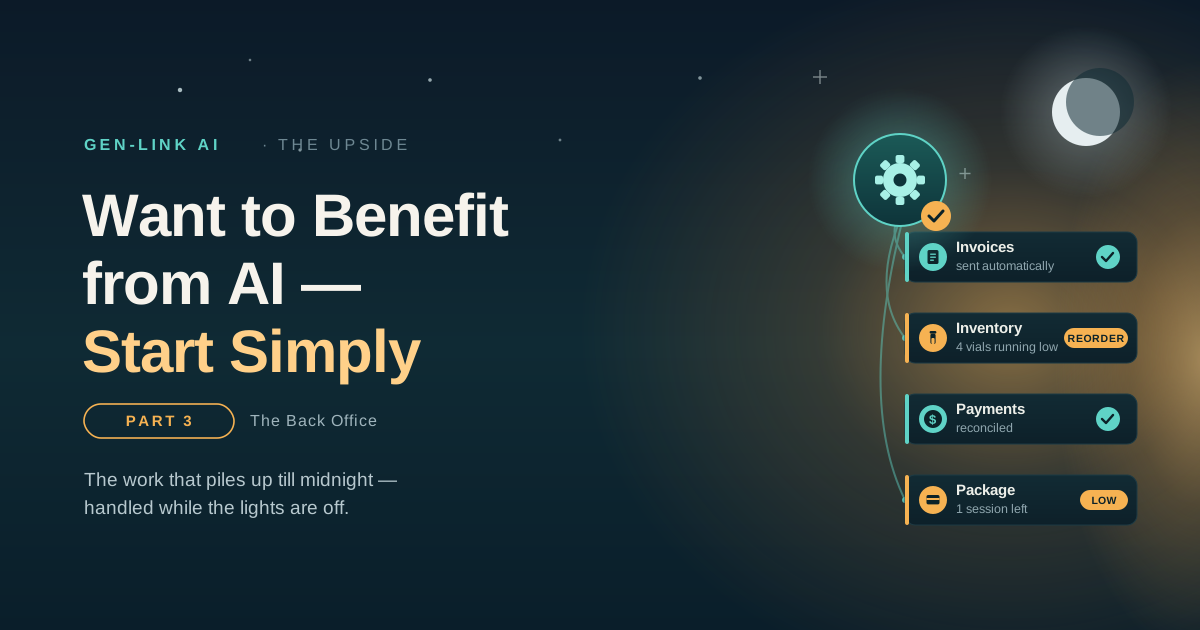
Want to Benefit from AI — Start Simply Part 3
Two parts down. In Part 1 we stood at your front door and caught the new patients trying to reach you. In Part 2 we turned around and went after the ones you'd already treated — the regulars who quietly drifted. Both of those happen out front, where the patients are. Now we walk past the desk, through the door behind it, into the room nobody posts about. The back office.
Here's how the day actually goes. Selling and treating get the daylight, because that's what keeps the lights on. The billing, the ordering, the reconciling — that stuff waits. So it piles up, and it lands on you at the end of the night. There you are at the kitchen table at eleven, matching payments to deposits, counting how many units are left in the fridge, wondering if that filler order should already have gone in.
That is no way to run anything. And it happens to be exactly the kind of work AI is good at taking off your plate.
Why this closes the series
The first two pieces fixed what you could see — calls, DMs, patients coming and going. This one fixes what you feel at the end of the day and can never quite get ahead of.
And it's the same kind of win as the other two. Low-risk. It doesn't touch a chart or change how your injectors work. It just takes the repetitive, rule-shaped tasks — the ones that follow the same pattern every single time — and stops letting them stack up until they own your evenings.
Think about what's actually back there. Invoices that go out when a job closes. Packages with a session count and an expiration nobody's watching. A neurotoxin order that has to land before you run dry mid-week. Allē and ASPIRE redemptions waiting to be reconciled. Tips, retail, financing, the balance somebody still owes from three visits ago. None of it needs your judgment every time. It just needs to get done, on time, without anything slipping through.
The gap your software leaves
Your systems are full of the right numbers. They're just not doing anything with them.
Your inventory module counts what's on the shelf. It does not look at next Tuesday's schedule and warn you that you're two vials short for appointments you've already booked, or that a box of filler expires before you'll plausibly use it. Your payment system records every transaction. It won't sit down at night and match the day's charges against what actually landed in the account. Your booking software knows a patient bought a six-session package and has used four — it will not flag that she's nearly out, or that the whole thing lapses in three weeks. The data is all there. The follow-through is on you. That's the gap we keep running into, and back here it's at its worst, because this is the work that's easiest to put off.
What AI actually does here
It does the first pass on the routine stuff, so you only step in when something needs you.
It drafts the invoice the minute a service closes. It reads next week's booked calendar against what's in the fridge and tells you what to reorder and when — before you're scrambling, not after. It flags the filler that's about to expire so it gets used instead of tossed. It reconciles the day's payments and surfaces what doesn't match, instead of leaving you to hunt for it. It watches the packages and memberships and raises a hand when one's running low or about to lapse. It pulls the Allē and ASPIRE numbers together so reconciliation becomes a quick review, not a search.
It doesn't make the call on your money. It doesn't sign anything. It gathers, matches, drafts, and flags — then hands you clean numbers to approve in a couple of minutes, instead of a pile of receipts to untangle at midnight. Your bookkeeper still bookkeeps. Your accountant still accounts. They just get tidy data instead of a shoebox.
"I'm not handing my books to a bot"
Good. Don't.
This was never about turning your finances over to anything. The human stays in charge of every decision that matters — what gets paid, what gets ordered, what gets written off. AI handles the part before the decision: the gathering and sorting and matching that eats your night and needs zero judgment. You review real numbers, fast, and move on. That's not less control. It's more — because you're finally looking at the whole picture instead of whatever you had the energy to pull together at eleven.
Start with the one you dread
Same move as always. Don't automate the whole back office on day one. Pick the one task you put off the most — the one that always ends up at midnight — and hand that off first. Maybe it's invoicing. Maybe it's the inventory guesswork. Whatever you'd most like to never do again. Get it running. Then add the next one.
And that's the series. Three places to start, and notice what they had in common. The front door. The patients you already had. The back office. Not one of them asked you to overhaul your practice or touch the clinical core. Each was the simple, safe, obvious thing that was quietly costing you — time, money, or both.
That's the whole point of starting simply. You don't start big. You pick one. You get it running. And little by little the repetitive work hums along in the background while you spend your hours on the part of this only you can do.
And you might just get your evenings back.