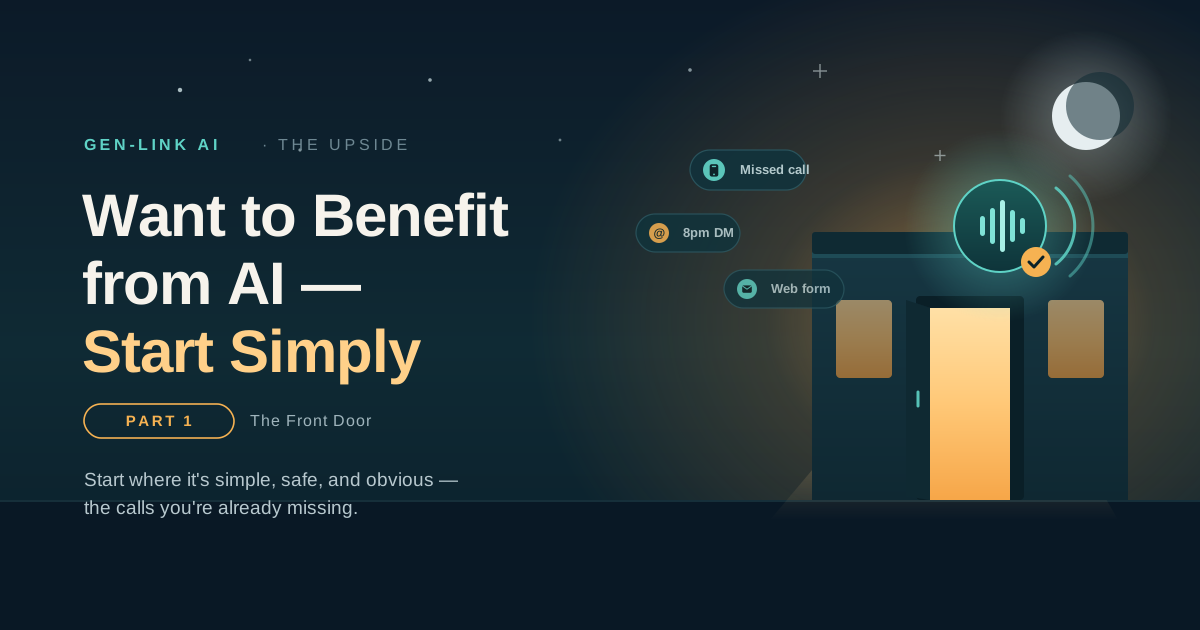
Want to Benefit from AI - Start Simply Part-1
You're mid-treatment. The phone rings up front. The desk is checking someone out, running a card, answering a question about parking. Nobody can grab it. So it rolls to voicemail.
That caller wanted Botox. They had a question, a card on hand, and a free afternoon. By the time anyone listens to that voicemail, they've already booked at the place that picked up.
That's the most expensive thing happening in your business, and you can't even see it. The patients you lose this way never show up in a single report. They were never in your system to begin with. They reached for the door, the door didn't open, and they walked next door.
So when you ask where to start with AI, start there.
Pick the easy win first
Most owners picture the hard stuff — charting, compliance, the medical side. Start there and you're asking for a headache. The smart first move is the opposite. Pick the thing that's low-risk, sits away from clinical work, and is bleeding money right now.
That's your front door. The phone. The Instagram DM. The web form that lands on a Sunday night.
Here's why it's the easy one. It doesn't touch a single chart. It doesn't change how your injectors work or how anything gets documented. It sits in front of your business and catches what's already falling through. Nothing about your clinical operation has to change for it to start paying off. And the pain it fixes is real money you're losing today.
The gap your software leaves
Your booking software is good at plenty of things. Answering is not one of them.
It sends reminders. It stores records beautifully. It cannot hold a conversation. It can't tell a caller what a treatment runs, what to expect, or whether Thursday at 2 is open. It can't reply to the DM that lands at nine at night or the form that comes in over the weekend. People shopping for aesthetic work shop fast, and they shop after hours. Speed wins. Your software files. It doesn't respond.
What AI actually does here
An AI voice and message agent picks up. Every call, every message, every time — daylight, midnight, Sunday.
It answers the common questions in your words and inside your protocols. It books the appointment straight into the system you already use. And when a question needs a person — a medical judgment, a complaint, anything outside the lines you've drawn — it hands off cleanly to your team. You decide what it handles and what it passes up.
It doesn't get tired. It doesn't miss the 8pm DM. It doesn't put a ready-to-book patient on hold while it runs somebody's card.
"Won't a robot answering my phone feel cold?"
Fair worry. So compare it to what's actually happening now.
The alternative isn't a warm human every single time. The alternative is voicemail. A full inbox. A DM read three days late. Nothing feels colder to a new patient than no answer at all. A fast, accurate reply the moment they're ready beats a callback tomorrow every time — and you're still the one who sets where a human steps in.
Start where you're already missing
Don't try to automate the whole front desk on day one. You don't need to.
Start with what's slipping through right now — after hours and overflow. The calls that go to voicemail because everyone's slammed. The messages that come in when you're closed. Let AI catch those first. That's pure recovery. You're not taking anything away from your team. You're picking up what was hitting the floor.
Get that running. Watch what comes back. Then we'll talk about the next piece.
Because here's the truth about starting with AI — you don't start big. You start where it's simple, safe, and obvious. The patients trying to reach you right now are the simplest, safest, most obvious place there is.
In Part 2, we'll go after the patients you've already treated — the ones who loved their results and quietly drifted away.