Data Protection & Privacy - Your FIRST Priority
If you run a small business in healthcare, two letters live rent-free in your head: HIPAA. Right behind them, PII — personally identifiable information. You already know what it means to keep that data locked down, because getting it wrong isn't a slap on the wrist. It's fines that climb into real money. It's the kind of breach that can end a business.
So when someone pitches you a digital employee — an AI agent that handles intake, billing, scheduling, follow-ups, the whole back office at a fraction of what a person costs — it's tempting. And I'll say it straight: it's often a smart move. You scale your capacity and your revenue without scaling payroll the same way. I advise it.
But you don't get to skip the part where you ask hard questions. A digital employee touches the same patient names, diagnoses, insurance numbers, and Social Security numbers a human would. That data doesn't stop being sacred just because a machine is the one handling it.
## The risks, plainly
A digital employee is only as safe as the pipes it runs through. That's the part most small businesses don't see.
Here's the thing that should keep you up at night. A lot of AI tools send your data off to a third-party model somewhere to do their work. If your vendor pipes protected health information through a model that stores it, or worse, trains on it, you've got a breach happening quietly in the background — and you might not find out until someone else does.
Then there's the paperwork most people skip. Under HIPAA, anybody handling protected health information on your behalf is a business associate, and that relationship needs a signed agreement. A BAA. The vendor behind your digital employee is no different from a billing company or a cloud provider. No BAA, no deal. If they won't sign one, that tells you everything.
A few more worth naming:
- Access creep. You hand the agent the keys to everything so it can do its job. Now if that account gets compromised, so does everything it could reach.
- Bad data, confidently delivered. AI can be wrong and sound completely sure of itself. In a patient record, a confident mistake is worse than no answer at all.
- No paper trail. When a regulator or an auditor asks who accessed a record and when, "the AI did it" is not an answer. You need to be able to show every action it took.
## The benefits, just as plainly
None of that means walk away. Done right, a digital employee can actually make you more compliant, not less.
A person gets tired. A person doing invoices at the kitchen table at eleven at night cuts corners — skips a redaction, fires off a record to the wrong inbox, forgets the minimum-necessary rule because it's late and they want to go to bed. A digital employee follows the rule the same way every single time. It doesn't get sloppy at the end of a long day.
It logs everything, if you build it to. It can be locked down so it only ever sees the slice of data it needs to do the task in front of it. It never "forgets" a step. And it lets a small team handle the volume of a much bigger one without quietly drowning in back-office work that nobody has time for.
The technology isn't the risk. The risk is hiring it the way you'd buy office supplies, without checking what's under the hood.
## The guardrails you actually need
Before a digital employee touches a single patient record, these have to be in place. Not nice-to-haves. Requirements.
- A signed BAA. First thing, every time. No exceptions.
- Minimum necessary access. The agent sees only the data it needs for the job, and nothing else. Scope it tight.
- Encryption in transit and at rest. Data should be locked up whether it's moving or sitting still.
- No training on your data. Get it in writing that your information is never used to train their models. A verbal "oh, we'd never" doesn't count.
- Audit logging. Every action the agent takes gets recorded, timestamped, and reviewable.
- A human in the loop on the sensitive stuff. Routine work runs on its own. Anything that carries real consequence gets a person's eyes before it goes out.
- A clean exit. You should know exactly where your data lives and how fast it's deleted the day you walk away.
## Questions to ask before you sign anything
Treat the vendor pitch like a job interview, because that's what it is. Here's what I'd put on the table:
1. Will you sign a Business Associate Agreement? If the answer is anything other than a clear yes, the conversation is over.
2. Where is our data processed and stored, and who else touches it along the way? You want names, not hand-waving.
3. Do you use our data to train your models? The answer needs to be no, and it needs to be in the contract.
4. Is our data encrypted in transit and at rest? Both. Not one or the other.
5. Can we control what the agent is allowed to see? You're looking for real role-based limits, not all-or-nothing access.
6. Can you show us a full audit log of everything the agent did? If they can't produce one, they don't have one.
7. What happens to our data when we leave? How fast is it deleted, and can you prove it's gone?
8. Have you been independently audited? SOC 2, HITRUST, something a third party signed off on. Their word isn't evidence.
9. What's your breach notification process, and how fast do we hear about it? You need a number, in hours or days, not "we'll let you know."
A good vendor answers all nine without flinching. The ones who get cagey, who talk around the question, who promise to "follow up on that" — believe them. That's your answer.
## The short version
A digital employee can absolutely earn its place in a healthcare business. It can take the grind off your team, hold the line on compliance better than a tired human, and let you grow without growing your overhead the hard way.
But it's still an employee with access to your most sensitive data. So vet it like one. Make it earn the keys before you hand them over.
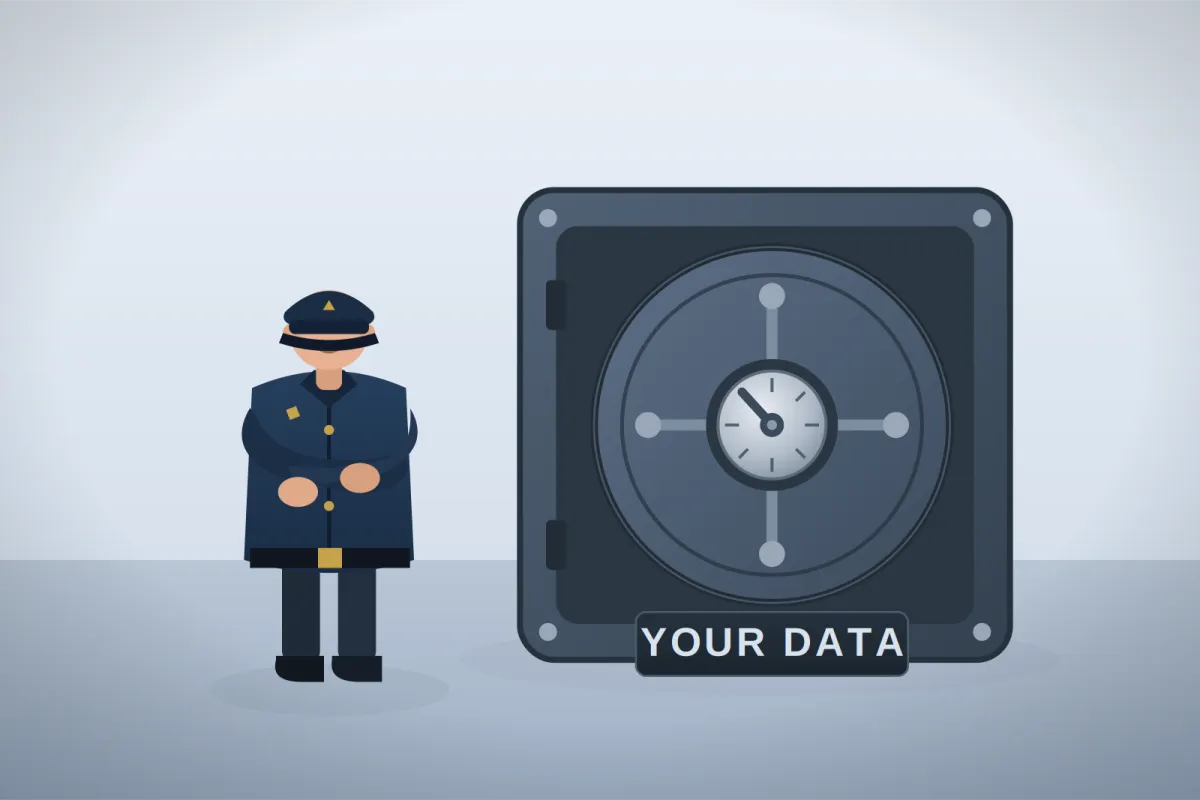
Because at the end of the day, somebody is standing in front of the safe with your patients' data inside it. Make sure you know exactly who — and exactly how good they are at their job.
Do you want to talk with us? Click https://gen-link-ai.net/contact